
Partnering with you to create accessible organizations
Learn how I ensure your oganization equips all brains, bodies, and backgrounds to thrive.
What I Do
I help organizations identify where accessibility breaks down across culture, systems, and physical environments, then support the operational work of redesigning with accessibility built in from the start and not added as an afterthought.
My framework is grounded in Disability Justice, Universal Design, and Intersectionality. I believe that accessibility cannot exist in isolation; race, gender, sexuality, class, age, and other identities shape how people experience work. i focus on building systems that meaningfully support disabled and neurodivergent employees while accounting for the full reality of how people move through your organization.
Organizations can engage through a structured Assessment & Roadmap, Embedded Support, or both. Some teams need focused support for a department, event, or project. Others want a full diagnostic and strategic plan. Many already know their priorities and need a trusted accessibility specialist to help execute. The outcome is the same: accessibility that functions as an operational strength and not just a statement of intent.
-
An assessment is a structured review of how accessibility actually functions inside your organization across culture, systems, policies, and physical environments.
The goal is to identify where barriers are embedded in how work is designed and translate those findings into a prioritized roadmap your leadership team can act on immediately.
Organizations can choose the scope of assessment based on their priorities. Some focus on hiring and onboarding. Others focus on office environments, employee experience, or leadership systems. The process is modular and tailored, not one-size-fits-all.
Assessments range across all parts of your organization including:
Culture
Systems & Processes
Physical Office & Workplace Access
Lived Experience Impact
Findings are translated into a prioritized roadmap that helps you understand what to change, why it matters, and where to start without overwhelming your team. This is ideal for organizations that want a strategic foundation before scaling accessibility work, or teams that need an outside perspective to validate and sharpen existing efforts.
-
Embedded support means I function as an accessibility specialist alongside your team. This can be driven by findings from an assessment or by priorities you’ve already identified. You do not need to complete an assessment to work with me in this capacity.
I step in where your team needs support and help translate accessibility goals into operational decisions.
Examples of embedded support include:
Reviewing and redesigning hiring, onboarding, or performance systems
Advising HR and leadership on inclusive policy and process design
Supporting ERG strategy and leadership development
Event accessibility planning and implementation
Coaching managers on neuro-inclusive leadership
Supporting individual accommodation and differentiation strategy (non-legal)
Reviewing training materials for accessibility and learning design
Serving as an on-call advisor for real-time accessibility decisions
Q&A sessions or virtual office hours for employees
Supporting specific teams navigating accessibility challenges
Advising on office design and physical environment adjustments
Project-based accessibility strategy and execution
This model allows organizations to get immediate, practical support without waiting for perfect conditions or consulting cycles.
How I Do It
Centering Lived Experience
Workplaces become stronger when they are designed with the people who have the least structural protection in mind. My approach to accessibility intentionally informs decisions through the experiences of those most impacted - including BIPOC communities, LGBTQIA+ people, immigrants, and those from the Global South. This work involves direct engagement with employees across levels so recommendations are grounded in real workplace experiences, ensuring accessibility strategy is built from the inside out rather than from the top down.
Partnership with ERGs
Employee Resource Groups are not symbolic - they are knowledge centers. When ERGs exist, they are integrated into the consulting process as collaborators. ERG leaders help identify priorities, surface blind spots, and contextualize lived realities that data alone cannot capture. This partnership strengthens internal ownership of accessibility work and prevents solutions that ignore community insight.
Evidence-Driven Recommendations
Recommendations are grounded in both qualitative lived experience and structural review of organizational systems. I combine your employee narratives alongside the proven and studied ways to practically create accessibility. Recommendations are primarily based on the IAAP as well as the UDL Guidelines.
Operational Accountability
Accessibility strategy is translated into prioritized action plans tied to ownership, timelines, and measurable outcomes. Recommendations are not abstract ideals, but are mapped to real teams, real budgets, and real operational decisions. This ensures progress is trackable and provable.
My Most Recent Project with Reckitt
An overview of my project with Reckitt’s new office space in Nutley, NJ!
The Reckitt Project.
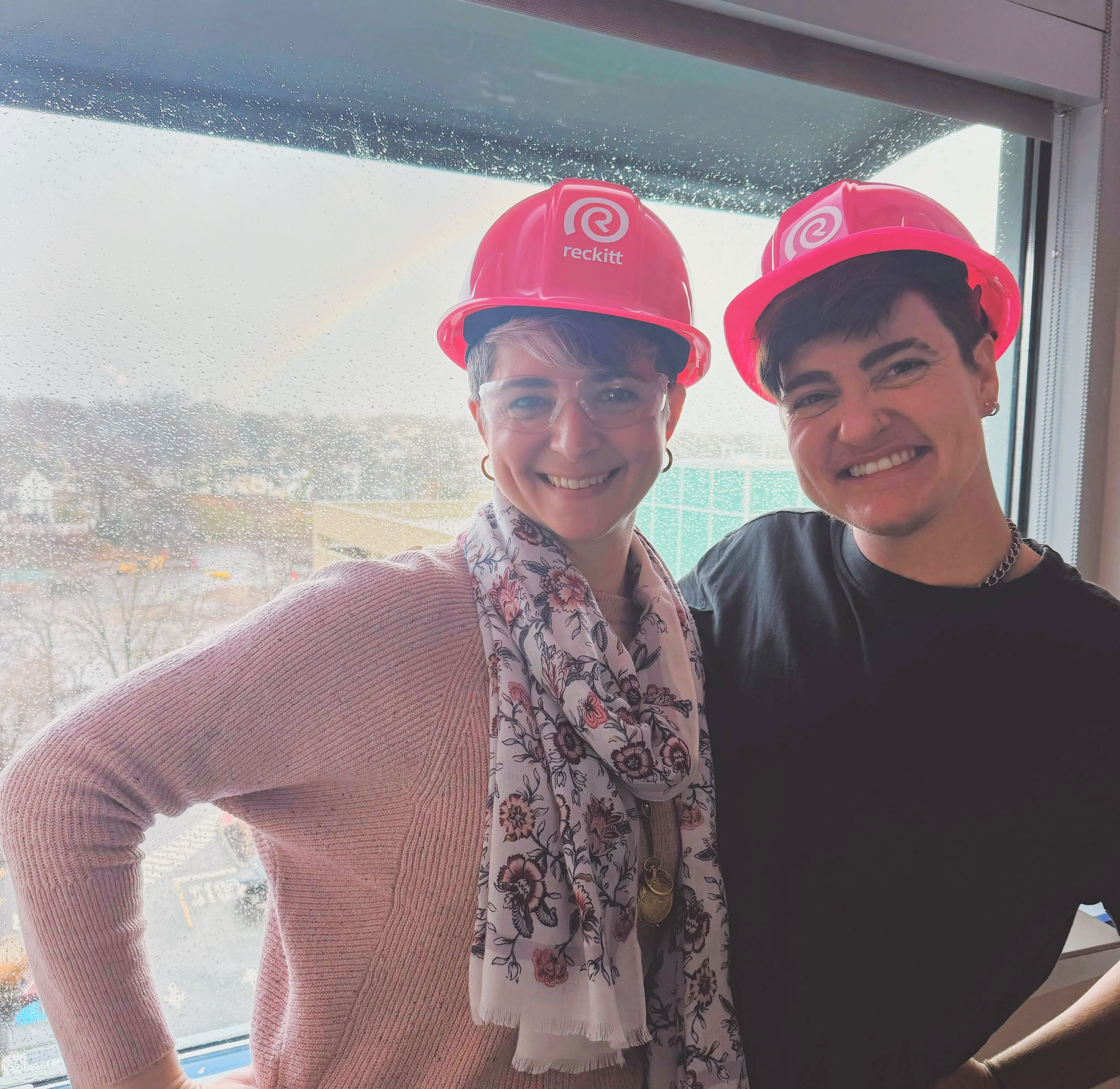
I recently completed an on-site accessibility and Universal Design assessment for Reckitt and their new office in Nutley, NJ. Reckitt is one of the leading consumer goods companies, with brands such as Dettol, Lysol, Durex, Finish, Harpic and Vanish, Mucinex, Nurofen, Gaviscon, Veet and Strepsils.
The project focused on identifying physical, sensory, and procedural barriers across the space - everything from desks, lighting and noise to meeting norms, kitchen fixtures, wayfinding, and emergency processes.
What made this project successful was the emphasis on practical accessibility: changes that support disabled and neurodivergent employees while also improving usability for everyone. Check out the recap video that was shared with employees during the office opening!
If you’re curious what an accessibility assessment would be like for your office, let’s set up a free discovery call!